Introduction
Paying taxes is an essential responsibility, but paying more tax than necessary is not.
Tax planning is the process of arranging your finances in a way that helps reduce your tax liability legally while supporting your long-term financial goals.
Many people postpone tax planning until the end of the financial year, often making rushed investment decisions. A better approach is to plan throughout the year so your investments align with your goals rather than being driven only by tax-saving deadlines.
This guide explains the fundamentals of tax planning in India and highlights strategies that can help you make informed financial decisions.
Why Tax Saving is Important
Effective tax planning can help you:
- Increase your disposable income
- Improve cash flow
- Build long-term wealth
- Encourage disciplined investing
- Support retirement planning
- Reduce financial stress
Tax saving should be viewed as part of a broader financial strategy, not just an annual exercise.
Tax Planning vs Tax Evasion
Understanding the difference is essential.
| Tax Planning | Tax Evasion |
|---|---|
| Legal | Illegal |
| Uses approved deductions and incentives | Involves concealing income or providing false information |
| Encouraged by law | Punishable under law |
| Long-term financial planning | Risk of penalties and legal action |
Always choose lawful tax planning methods and maintain proper documentation.
Understanding the Indian Tax System
India’s income tax framework may include different tax regimes and provisions that are updated from time to time through the Union Budget.
When planning your taxes:
- Understand the applicable tax regime.
- Review available deductions and exemptions.
- Compare options before filing your return.
Because tax laws evolve, it is important to refer to the latest government notifications or consult a qualified tax professional.
Benefits of Early Tax Planning
Waiting until the last month of the financial year can lead to poor investment choices.
Advantages of Starting Early
| Benefit | Explanation |
|---|---|
| Better Investment Decisions | More time to evaluate options |
| Improved Cash Flow | Investments spread throughout the year |
| Reduced Financial Pressure | Avoid last-minute lump-sum investments |
| Potential Long-Term Growth | Investments remain invested for longer |
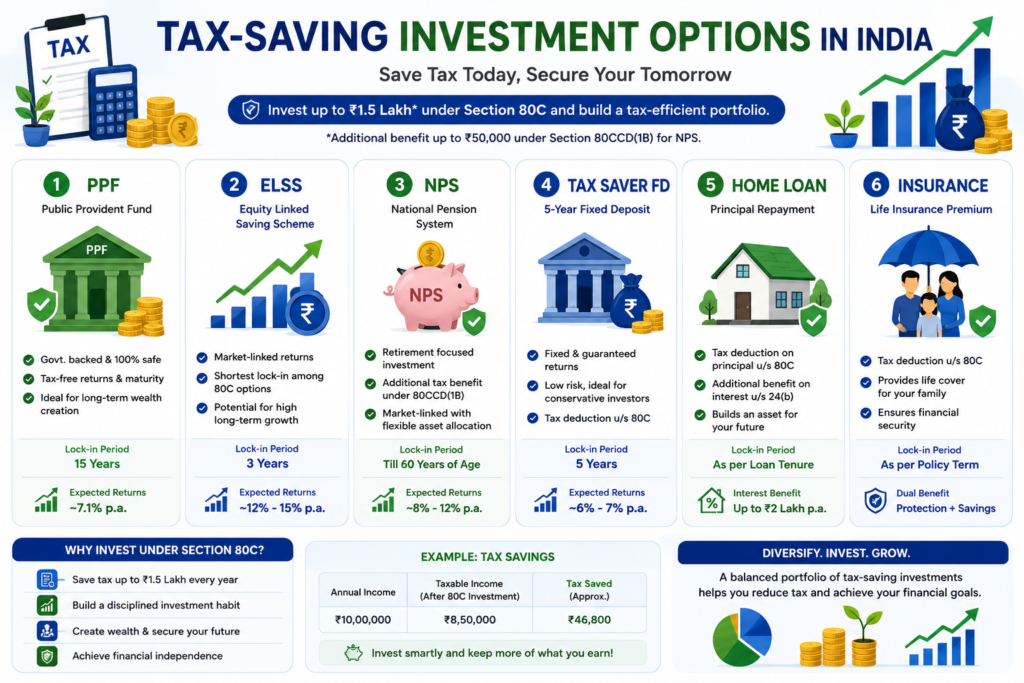
Popular Tax-Saving Investment Options
Several financial products are designed to support both wealth creation and tax efficiency, depending on current tax rules.
| Investment Option | Risk Level | Lock-in | Suitable For |
|---|---|---|---|
| Public Provident Fund (PPF) | Low | Long-term | Conservative investors |
| ELSS Mutual Funds | Moderate to High | Lock-in applies | Long-term wealth creation |
| National Pension System (NPS) | Moderate | Retirement | Retirement planning |
| Tax-Saving Fixed Deposits | Low | Fixed lock-in | Conservative investors |
| Sukanya Samriddhi Scheme | Low | Long-term | Girl child savings |
Always verify the latest eligibility rules and tax treatment before investing.
Choosing the Right Tax-Saving Investment
The best option depends on your financial objectives.
| Goal | Suitable Investment |
|---|---|
| Retirement | NPS, PPF |
| Long-Term Wealth | ELSS |
| Capital Preservation | Tax-Saving FD |
| Child’s Future | Sukanya Samriddhi Scheme |
Do not choose investments based solely on tax benefits. Consider risk, liquidity, and long-term suitability.
Insurance and Tax Planning
Insurance primarily provides financial protection, but certain insurance products may also offer tax advantages under prevailing laws.
Types of Insurance
| Insurance | Primary Purpose |
|---|---|
| Health Insurance | Medical expense protection |
| Life Insurance | Financial security for dependents |
| Term Insurance | Income replacement |
| Critical Illness Insurance | Major illness coverage |
Choose insurance based on protection needs first, with tax benefits considered as an additional advantage.
Home Loan and Tax Benefits
Buying a home may provide tax advantages depending on the applicable provisions and eligibility conditions.
Potential areas where benefits may apply include:
- Home loan principal repayment
- Home loan interest payments
Because these benefits are subject to changing regulations and conditions, verify the latest rules before making financial decisions.
Retirement Planning and Taxes
Retirement planning and tax planning often go hand in hand.
Benefits of early retirement planning include:
- Long-term compounding
- Disciplined savings
- Financial independence
- Potential tax efficiency (subject to current laws)
Starting early generally allows smaller, consistent contributions to grow over time.
Tax Planning for Salaried Individuals
Salaried professionals can improve financial efficiency by:
- Reviewing salary structure
- Maintaining investment records
- Planning investments early
- Filing returns on time
- Keeping supporting documentation organized
Tax Planning for Self-Employed Professionals and Business Owners
Business owners should:
- Maintain accurate bookkeeping
- Separate personal and business finances
- Preserve invoices and receipts
- Plan advance tax obligations where applicable
- Consult qualified tax advisors when necessary
Proper financial records simplify compliance and improve decision-making.
Common Tax Planning Mistakes
Avoid these common errors.
| Mistake | Why It’s Risky |
|---|---|
| Waiting until year-end | Leads to rushed decisions |
| Investing only for tax benefits | May not suit financial goals |
| Poor documentation | Difficulties during filing or verification |
| Ignoring changes in tax laws | Missed opportunities or compliance issues |
| Missing filing deadlines | Potential penalties and inconvenience |
Tax Planning Checklist
| Task | Completed |
|---|---|
| Reviewed applicable tax regime | ☐ |
| Organized financial records | ☐ |
| Planned investments early | ☐ |
| Reviewed insurance coverage | ☐ |
| Evaluated retirement savings | ☐ |
| Checked home loan benefits (if applicable) | ☐ |
| Filed income tax return on time | ☐ |
Building Wealth While Saving Tax
The most effective financial plans focus on both wealth creation and tax efficiency.
For example:
| Financial Goal | Possible Approach |
|---|---|
| Emergency Fund | Liquid savings |
| Long-Term Growth | Diversified investments |
| Retirement | Long-term retirement products |
| Protection | Adequate insurance |
Rather than selecting products solely because they offer tax advantages, choose investments that support your overall financial objectives.
Frequently Asked Questions
1. What is tax planning?
Tax planning is the legal process of arranging finances to reduce tax liability while complying with applicable laws.
2. When should I start tax planning?
Ideally, at the beginning of the financial year. Early planning provides greater flexibility and reduces year-end pressure.
3. Is tax planning the same as tax evasion?
No. Tax planning is legal, while tax evasion involves illegal practices such as concealing income or submitting false information.
4. Should I invest only to save tax?
No. Tax benefits should complement your financial goals, not determine them entirely.
5. Should I consult a tax professional?
If your financial situation is complex or you are unsure about current regulations, consulting a qualified tax professional can be beneficial.
Final Thoughts
Tax planning is most effective when it forms part of a comprehensive financial strategy. Rather than rushing to make last-minute investments, build a year-round approach that balances tax efficiency with long-term wealth creation.
Remember that tax laws and deductions may change over time. Stay informed, maintain proper records, and review your financial plan regularly to ensure it continues to meet your goals.
Call to Action
Start planning your taxes early, review your financial goals annually, and choose investments that align with both your future objectives and current tax regulations. Thoughtful planning today can help you retain more of your hard-earned income while building long-term financial security.